
How Custom Men's Shirts Help Hospitality and Corporate Brands Build a Consistent Professional Identity
A guest walks into a hotel, a customer enters a restaurant, or a visitor arrives at a company's reception desk. Before a single word is exchanged, the appearance of the staff communicates something about the business.
For hotels, restaurants, hospitality groups and corporate organizations, employee clothing is more than a practical necessity. It is part of the brand experience.
A well-designed shirt can help create a consistent visual identity across departments, properties and customer-facing teams. But developing these garments requires a different approach from simply purchasing standard shirts and adding a company logo.
Private label shirt manufacturing allows businesses to develop shirts around their own brand identity, working environment and operational requirements.
At M.DAG Shirts, we specialize in men's shirt manufacturing and work with brands and businesses seeking custom shirt production. Our focus is on developing shirts that combine the intended appearance, appropriate construction and practical production planning.
In this guide, we explain how hospitality and corporate shirt manufacturing works, what businesses should consider before production, and why consistency matters when developing a long-term staff clothing program.
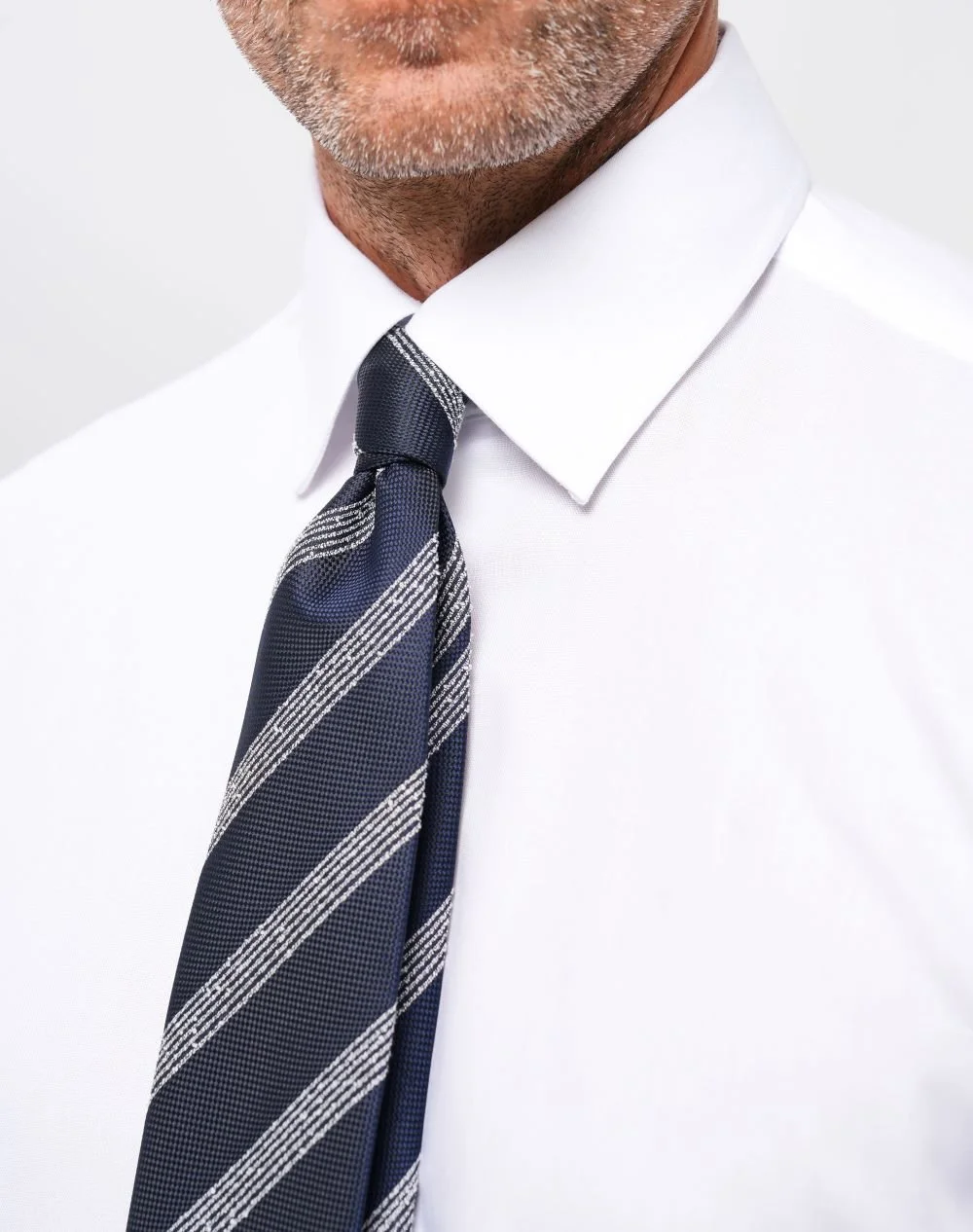
What Is Private Label Shirt Manufacturing for Hospitality and Corporate Brands?
Private label shirt manufacturing is the production of shirts according to a customer's specifications rather than relying exclusively on ready-made products.
For hospitality and corporate buyers, these specifications may include:
Shirt silhouette and fit
Fabric composition, texture and color
Collar and cuff design
Button selection
Logo embroidery or other approved branding details
Brand labels and care labels
Size specifications
Packaging and delivery requirements
The objective is not necessarily to create an unusual or highly decorative garment.
In many cases, the most successful corporate shirt is one that looks professional, feels appropriate for the working environment and remains visually consistent across employees.
This makes private label production relevant to hotel groups, restaurant chains, premium hospitality businesses and companies that want greater control over their staff's appearance.
Why Standard Uniform Shirts May Not Meet Every Brand's Needs
Ready-made uniform shirts can be suitable for straightforward requirements. They are often convenient when immediate availability is the main priority.
However, businesses with specific brand standards may encounter limitations.
A standard shirt may have the right color but the wrong collar shape. Another may offer the desired fit but lack the appropriate fabric. A third may be suitable for one department but inconsistent with shirts worn by another team.
For businesses operating multiple locations, these differences can become more visible over time.
Private label manufacturing provides an opportunity to define the product specifications instead of selecting from whatever is currently available.
It can also support repeat production based on approved designs, subject to fabric and component availability.
The distinction is important: custom manufacturing is not simply about placing a logo on a shirt. It is about defining the shirt itself.
Hotel Shirt Manufacturing: Different Departments, One Brand Identity
Hotels are a particularly interesting example because different departments often need different types of clothing.
A luxury hotel's front desk team may require a structured, formal appearance. Restaurant staff may need shirts that allow comfortable movement during long shifts. Guest relations personnel may require a polished style that is less formal than traditional businesswear.
These needs do not always require completely unrelated products.
A hotel can develop a coordinated shirt program using shared brand elements while adapting individual garments to each department.
Front Desk and Reception Shirts
Reception staff are among the first people guests encounter.
Their shirts may need to communicate professionalism, attention to detail and alignment with the hotel's visual identity.
Relevant design considerations include collar structure, fit, fabric appearance, sleeve length and the relationship between the shirt and other uniform pieces.
A classic dress shirt may be appropriate for a formal property, while a contemporary hotel may prefer a softer, more relaxed silhouette.
Restaurant and Food & Beverage Staff Shirts
Restaurant employees often work in environments involving frequent movement, extended shifts and repeated laundering.
Shirt development should therefore consider practical movement, fabric suitability, care requirements and the intended service environment.
A fine-looking fabric is not automatically the best choice for every restaurant operation.
The correct decision depends on how the shirt will be worn, maintained and replaced.
Guest Relations and Concierge Shirts
Guest relations teams often need clothing that is approachable while remaining consistent with the hotel's overall identity.
A coordinated shirt collection can use related colors, fabrics or design details without requiring every department to wear an identical garment.
This creates a more coherent staff presentation while allowing appropriate differences between roles.
Restaurant Shirt Manufacturing: Balancing Brand Character and Daily Use
Restaurants vary significantly in their visual identity.
A fine-dining restaurant may prefer a crisp, tailored shirt. A contemporary restaurant group may choose a casual shirt with a distinctive collar. A café chain may require a simpler design that can be repeated across many locations.
For restaurant operators, three considerations are particularly important.
1. The Shirt Should Reflect the Restaurant's Positioning
Staff clothing should support the atmosphere the restaurant is trying to create.
A formal shirt may look out of place in a relaxed café, just as an overly casual shirt may conflict with the presentation of a luxury dining venue.
The appropriate design is determined by the brand, not by a universal uniform formula.
2. Movement and Comfort Must Be Considered During Development
Restaurant employees may reach, bend, carry items and move continuously throughout a shift.
Fit evaluation should consider these activities rather than judging the garment only while the wearer is standing still.
Sleeve mobility, shoulder comfort and overall ease can influence whether a shirt is appropriate for its intended role.
3. Repeated Care Is Part of the Product Requirement
Restaurant shirts may be washed frequently.
Fabric choice, colorfastness, dimensional stability and care instructions should therefore be evaluated against the customer's actual laundering practices.
Where industrial laundering is intended, the required conditions should be communicated before fabric and garment approval. Performance should be verified through relevant testing rather than assumed.
Corporate Shirt Manufacturing for Companies and Professional Teams
Private label shirt production is not limited to hospitality businesses.
Companies may require coordinated shirts for reception teams, sales personnel, showroom employees, customer service staff, trade fair representatives or other customer-facing roles.
The objective is often to establish a recognizable professional identity without making every employee look as though they are wearing a traditional uniform.
For example, a company may select a business shirt in its preferred brand color, incorporate discreet embroidery and develop a consistent fit across a defined size range.
A more contemporary company might prefer a smart-casual shirt with subtle branded details.
Corporate shirt manufacturing gives businesses the opportunity to define a repeatable garment specification rather than repeatedly searching for a similar ready-made product.
For companies operating across different offices or regions, this consistency can become especially valuable.
One Brand, Multiple Shirt Designs: Building a Coordinated Program
A hospitality group may manage several hotels, restaurants and customer-facing departments.
It does not necessarily need one identical shirt for everyone.
Instead, it can establish a common design system.
For example:
DepartmentPossible shirt directionShared brand elementHotel receptionStructured business shirtBrand color and approved buttonsRestaurant serviceComfortable smart-casual shirtCoordinated fabric paletteGuest relationsRefined casual shirtConsistent collar or embroidery detailCorporate receptionClassic professional shirtApproved fit and branding placementEvents teamPractical branded shirtShared visual identity
These are illustrative design options, not fixed rules for each profession.
The benefit of this approach is that a business can maintain a recognizable identity while accommodating different working conditions.
A specialist shirt manufacturer can help evaluate whether the proposed designs can share patterns, materials or production components without compromising their intended use.
Why Repeat Orders Matter More Than a Single Successful Delivery
Hospitality and corporate clothing programs rarely end with one purchase.
Employees join and leave. Teams expand. New locations open. Existing garments need replacement.
For this reason, businesses should think beyond the first production order.
A shirt that looks excellent during the initial launch may become an operational problem if its specifications cannot be reproduced consistently.
A repeat-order strategy should consider:
Approved garment specifications: The business should retain a clear record of the agreed pattern, measurements, design details and components.
Fabric continuity: The original fabric may not remain available indefinitely. Businesses should discuss continuity requirements and possible alternatives before committing to a long-term program.
Color consistency: When new shirts are added to an existing uniform program, visible differences between production batches may matter.
Size availability: Replacement orders should reflect actual employee requirements rather than relying on an arbitrary size ratio.
Reorder planning: Businesses should establish realistic replenishment expectations, including minimum quantities, material availability and production lead times.
A successful corporate shirt program is therefore not just a product-development project. It is also a continuity-planning project.
Why Fabric Selection Should Start With the Working Environment
One of the most common mistakes in uniform development is selecting a fabric primarily because it looks attractive in a sample.
Appearance matters, but it is only one part of the decision.
Before selecting a fabric, businesses should define how the shirt will be used.
Important questions include:
Will the shirt be worn primarily indoors or outdoors?
Is the working environment temperature-controlled?
How frequently will the shirt be washed?
Will the garments be maintained by employees or a professional laundry?
Is a formal appearance more important than a relaxed silhouette?
Are there specific comfort or mobility requirements?
Are there documented color, durability or care-performance requirements?
Depending on the answers, different woven or knitted constructions may be worth evaluating.
Cotton, cotton blends and other suitable fabrics each have characteristics that must be assessed against the intended application.
No single composition guarantees the best result for every hotel, restaurant or company.
The fabric, pattern, garment construction and care process need to work together.
Branding Details: Visible Identity Without Overdesigning the Shirt
A private label corporate shirt does not need prominent branding to be recognizable.
Some businesses prefer a visible embroidered logo. Others want a discreet mark, a distinctive button, a specific collar shape or a carefully selected color.
Branding options may include embroidered logos, woven labels, customized buttons or other agreed details.
However, the placement and construction of these elements should be evaluated before production.
For example, embroidery can influence the appearance and behavior of lightweight fabric. The size, density, backing and placement of an embroidered design may require testing.
The best solution is often one that integrates branding into the shirt without compromising its intended appearance or comfort.
For premium hospitality brands, restraint can be as important as visibility.
How to Develop a Private Label Hospitality Shirt Program
A structured development process helps reduce uncertainty before bulk manufacturing.
Step 1: Define the Departments and Their Requirements
Identify which teams will wear the shirts, the working conditions and the intended visual style.
Avoid assuming that one garment specification will suit every department.
Step 2: Establish the Brand Design Direction
Provide brand colors, reference garments, sketches, logos or other relevant visual guidelines.
These references help translate a brand identity into practical garment specifications.
Step 3: Select Suitable Fabrics and Components
Evaluate fabric options based on appearance, comfort, care requirements and sourcing availability.
Confirm the intended buttons, labels and branding details.
Step 4: Develop and Evaluate Samples
Samples should be reviewed for appearance, fit, movement and relevant construction details.
Where necessary, testing should be arranged for properties important to the intended use.
Step 5: Approve Sizes and Production Specifications
A clear size chart and approved garment specification help support consistency across the production order.
For larger teams, a size trial or other appropriate fitting process may help reduce avoidable sizing problems.
Step 6: Plan Production and Replenishment
Before confirming bulk production, discuss quantities, size breakdowns, packaging, delivery expectations and future reorder requirements.
For multi-location organizations, delivery allocation and replenishment responsibilities should also be established.
The goal is to develop a shirt that works not only at launch but throughout the intended clothing program.
Can Hotels and Companies Order Custom Shirts in Smaller Quantities?
Minimum order quantities depend on the manufacturing project.
Factors may include fabric availability, the number of designs, colors, sizes, customized components and production requirements.
A simple shirt using available materials may have different production conditions from a highly customized garment requiring specially developed fabric or accessories.
For this reason, businesses should share their expected quantities and specifications early in the discussion.
At M.DAG Shirts, production possibilities are evaluated according to the requirements of the project. The applicable minimum order quantity should be confirmed during the quotation process.
What Should a Hospitality Brand Send to a Shirt Manufacturer?
Businesses do not always need to begin with a complete technical package.
However, a clear initial brief can make the development process more efficient.
Useful information includes:
Business type and intended use
Departments requiring shirts
Estimated quantity per design
Desired appearance and fit
Preferred fabric or reference garments
Brand colors and logo files
Size range and expected size distribution
Care and laundering requirements
Target delivery date
Destination market and any applicable product or labeling requirements
Providing this information allows the manufacturer to understand the project more accurately and identify questions that should be resolved before sampling.
Why Work With a Specialized Men's Shirt Manufacturer?
Shirt manufacturing involves product-specific decisions relating to fit, collar construction, cuffs, plackets, fabrics and finishing.
These details are particularly relevant when a business needs a consistent design across different sizes and future orders.
A manufacturer specializing in shirts can approach a hospitality or corporate project as a garment-development task rather than treating it solely as a logo application.
This distinction matters for businesses that want to establish their own specifications and retain control over their clothing identity.
It is also why the production brief should clearly define the garment itself, not just the company branding.
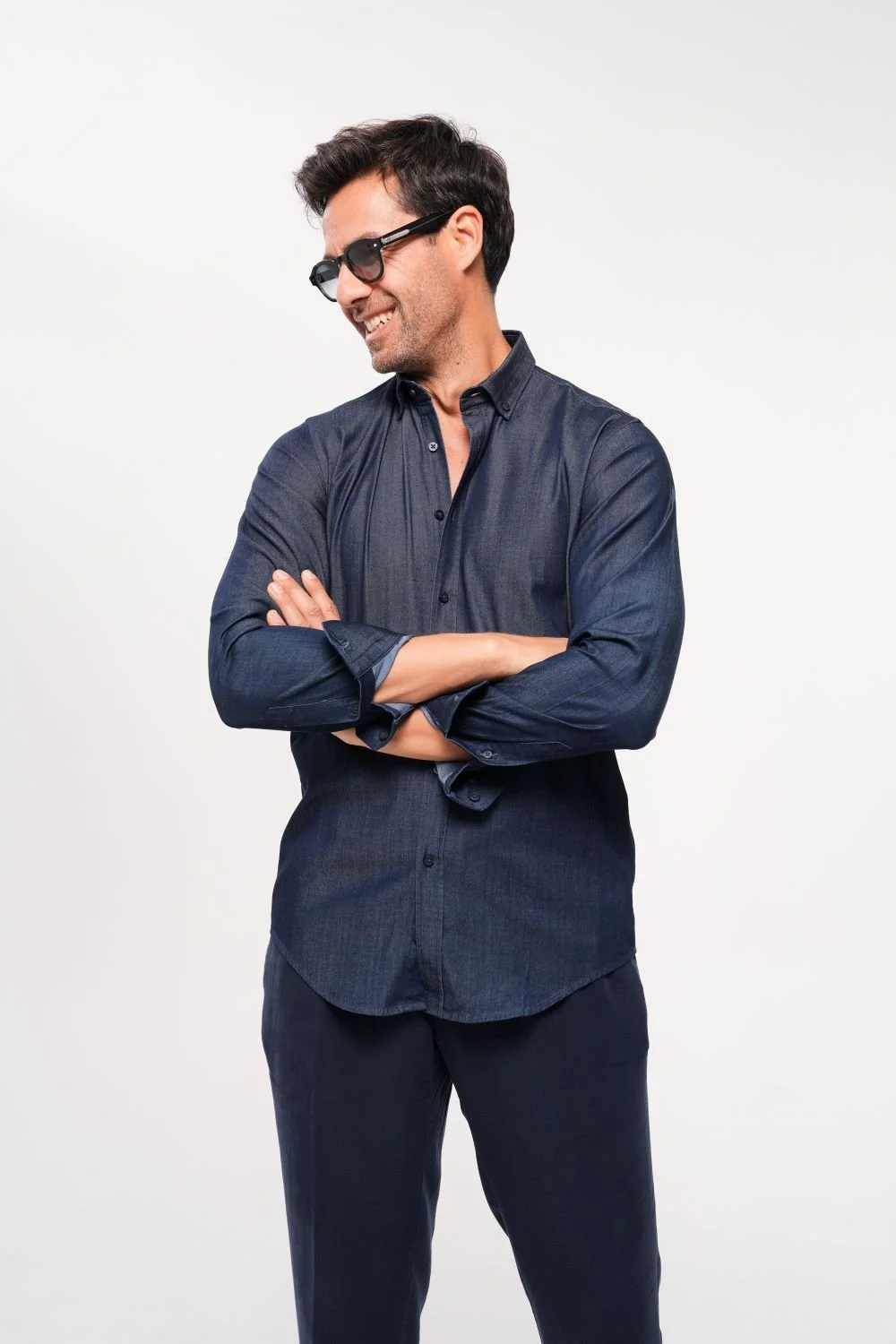
M.DAG Shirts: Custom Shirt Manufacturing for Business and Hospitality Projects
M.DAG Shirts is an Istanbul-based men's shirt manufacturer with more than 25 years of family manufacturing experience.
We specialize in shirt production for brands and business customers, including private label manufacturing projects.
Our manufacturing focus includes classic and business shirts as well as casual and other men's shirt categories.
For hotels, restaurants, companies and hospitality brands, the starting point is understanding the intended shirt design, quantity, fabric requirements and production specifications.
Whether a business is developing a formal reception shirt, a smart-casual restaurant shirt or a coordinated corporate clothing collection, we can discuss the manufacturing
