
How to Build a Total Look Collection with One Manufacturer (Shirts + Suits + Pants + Knitwear + Outerwear)
Introduction: Why “Total Look” Collections Are Growing in Menswear
Many menswear brands used to source products category by category—shirts from one factory, suits from another, knitwear from a third supplier, and outerwear somewhere else. But today, a growing number of brands are moving toward a smarter approach:
✅ building a total look collection with one manufacturer (or one main production partner)
This sourcing model is especially attractive for:
new brands launching their first collection
wholesalers building cohesive seasonal drops
European brands looking to reduce supplier complexity
labels that want consistent quality across product groups
In this article, we’ll explain how to build a total look collection with one manufacturer and what to check to avoid common sourcing mistakes.
1) What Is a “Total Look” Collection?
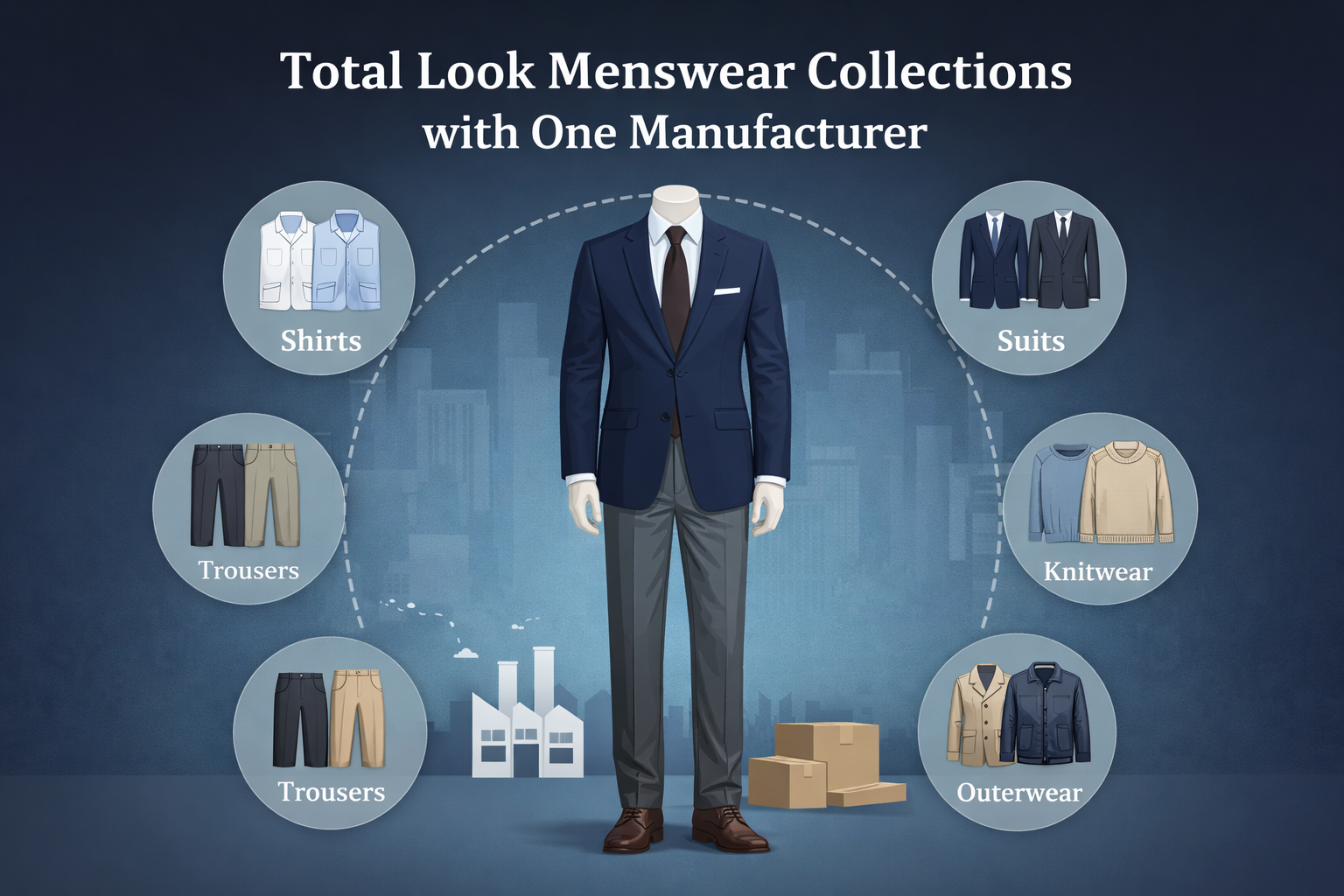
A total look collection means a brand offers a complete outfit solution, not only one product category.
In menswear, it typically includes:
Shirts (dress shirts, casual shirts, overshirts)
Suits (jackets + trousers, formal tailoring)
Pants / Trousers (chinos, wool trousers, smart casual)
Knitwear (sweaters, polos, cardigans)
Outerwear (overshirts, jackets, coats)
Instead of sourcing each product from a separate supplier, brands choose one menswear manufacturer or production partner who can handle multiple categories through one coordinated workflow.
2) Why Brands Prefer One Manufacturer for Multiple Product Groups
From a brand and buyer perspective, supplier consolidation has many advantages.
✅ Faster development and sampling
When product groups are managed under one coordination structure, sampling becomes easier to plan. Brands can align the fit, silhouette, and fabric story faster.
✅ Consistent quality across the collection
When one production team follows the brand’s standards, it’s easier to achieve consistency in:
stitching levels
finishing expectations
measurement tolerances
color and fabric harmony
✅ Better timeline planning
Fall/Winter or Spring/Summer collections require strict delivery windows. One manufacturer can coordinate production schedules with fewer delays between product categories.
✅ Easier communication and fewer mistakes
Instead of managing multiple factories, brands focus on one partner that handles:
tech pack interpretation
sample revisions
bulk production follow-up
packaging requirements
✅ Stronger long-term partnership
Brands that grow want suppliers who grow with them. A single production partner helps optimize reorders and repeat styles season after season.
3) Step-by-Step: How to Build a Total Look Collection with One Manufacturer
Step 1: Define the collection structure (Category Mix)
Before contacting a menswear manufacturer, brands should decide their collection plan:
How many shirt styles?
Are suits a key category or an additional option?
Is knitwear a seasonal highlight?
Outerwear: light overshirts or heavy jackets?
✅ A clear product mix helps manufacturers provide accurate timelines and MOQs.
Example: Total Look Capsule Plan
4 shirt styles
2 pants styles
2 knitwear styles
1 overshirt or jacket style
This level of clarity makes sampling and cost planning much easier.
Step 2: Align fabric planning across categories
A strong total look collection has fabric harmony. This doesn’t mean using the same fabric everywhere—but it means building a cohesive seasonal story.
For example:
Fall/Winter fabric story:
Brushed cotton or flannel for shirts
Wool blend for suits
Twill or structured cotton for trousers
Merino or cotton knit for knitwear
Heavy overshirt fabric or melton for outerwear
A strong menswear manufacturer supports buyers by recommending fabrics that match:
target price level
season
comfort needs
performance requirements
Step 3: Standardize fits for brand identity
One of the biggest advantages of working with one manufacturer is fit consistency.
Brands should define a fit system such as:
slim fit
modern fit
relaxed fit
oversized fit
Then apply it across categories:
shirts: shoulder and body comfort
suits: clean structure and proportion
trousers: waist, thigh, and leg balance
outerwear: layering comfort
knitwear: correct body length and sleeve shape
✅ Fit consistency is what makes a “total look” feel like a real brand—not random individual products.
Step 4: Develop a tech pack system (even a basic one)
A total look collection requires solid product information flow.
Many new brands do not have full tech packs. That’s normal. But the manufacturer should still receive:
reference images
fabric targets
key construction details
expected size range
branding requirements
packaging requirements
📌 A professional production partner can also offer a structured template to collect missing details and speed up the quotation process.
Step 5: Plan sampling in the correct order
When producing multiple categories, sampling order matters.
Recommended sampling order:
shirts (fastest to test fit and finishing standards)
trousers (fit and balance for bottom wear)
knitwear (yarn and structure confirmation)
outerwear (construction complexity)
suits (highest precision and biggest fitting impact)
This approach reduces development risks and helps brands lock in their “DNA” before moving to more complex categories.
4) What to Check When Choosing a Total Look Menswear Manufacturer
Not every supplier is truly a one-stop manufacturer.
A reliable partner should be able to clearly explain:
✅ Production capabilities
which product groups are produced in-house
which ones are coordinated through trusted partner workshops
how quality control is managed across categories
✅ MOQ and quantity flexibility
Different categories often have different MOQs. A good manufacturer will propose a workable solution that fits the buyer’s collection size.
✅ Lead time and scheduling discipline
Total look collections need planning. The manufacturer should communicate lead times clearly for:
sampling
bulk production
packing
shipment readiness
✅ Quality control structure
For total look production, QC must be stable.
A serious manufacturer can explain their QC workflow such as:
fabric inspection
in-line control
final inspection
packing checks
✅ Private label branding integration
For total look collections, brands want consistent private label details such as:
woven labels
size labels
care labels
hangtags
barcodes and packaging
A strong production partner supports branding across all product groups.
5) The Biggest Risk of “One Supplier for Everything” (And How to Avoid It)
Supplier consolidation is powerful, but brands must manage one key risk:
⚠️ “One supplier” does not always mean equal expertise across every category.
For example, a factory may be excellent in shirts but weaker in outerwear structure or knitwear finishing.
✅ The solution is simple:
choose a main manufacturer for core items (like shirts)
build the rest through controlled production planning and strict QC
request samples for each category before bulk production
The best partners are transparent and quality-driven, not “yes to everything” suppliers.
6) How Quality Control Works Across Multiple Categories
When building a total look collection, quality control cannot be only final inspection. It must be structured.
Quality checkpoints to request:
fabric inspection before cutting
measurement checks during sewing
button and trimming stability checks
ironing and finishing standards
packaging verification (labels, barcodes, polybags)
✅ This approach prevents small mistakes from becoming large collection issues.
7) How to Manage Reorders and Repeat Styles
Brands that succeed with total look collections want consistent reorders.
A good manufacturer supports reorders by:
keeping production records
saving approved fit patterns (where applicable)
matching fabric and color continuity
maintaining consistent size grading and tolerances
Reorders are where a supplier becomes a real production partner.
8) Packaging and Logistics for Total Look Collections
When sourcing multiple product groups, packing discipline becomes a major factor in warehouse efficiency.
Brands often need:
category separation by cartons
size breakdown labeling
barcode and hangtag application
consistent folding method
product group labeling for inventory teams
A manufacturer who understands packaging workflow helps buyers avoid:
warehouse confusion
incorrect product labeling
delays in distribution
Conclusion: Total Look Collections Are Built with Systems, Not Only Products
Building a total look collection with one manufacturer is one of the smartest sourcing strategies for modern menswear brands. It allows brands to:
✅ reduce supplier management
✅ speed up sampling and development
✅ maintain consistent quality
✅ build stronger long-term supply chains
But success depends on choosing a manufacturer who can deliver:
real production knowledge
category coordination
stable QC
professional communication
For brands looking to scale, a strong menswear manufacturing partner is not just a supplier—it’s part of the brand’s growth strategy.
