
Why Custom Corporate Shirts Should Be Made by a Shirt Manufacturer
When a company needs shirts for its employees, sales team, hotel staff, retail stores, trade show team or corporate events, the first instinct is often simple:
Choose a ready-made shirt, add the company logo and place the order.
That approach can work for basic promotional clothing.
But a custom corporate shirt serves a different purpose.
It may be worn eight hours a day. It represents the company in front of customers. It needs to fit employees with different body types. It may need to be reordered months or years later. The collar needs to maintain a professional appearance, the fabric needs to suit the working environment, and the embroidered or printed logo needs to work with the garment rather than look like an addition made afterward.
This creates an important distinction:
There is a difference between putting a company logo on a shirt and manufacturing a shirt for a company.
At Mehmet Dağ Shirts, we have more than 25 years of experience specializing in men's shirt manufacturing in Istanbul, Turkey. For corporate projects, our approach starts with the shirt itself: its purpose, fabric, fit, collar, construction, sizing and daily use. The company logo, embroidery, printing and other branding details are then developed as part of the complete product.
For businesses looking for custom corporate shirts, embroidered company shirts, staff uniform shirts or trade show shirts, working directly with a specialized shirt manufacturer can provide much greater control over the final product.
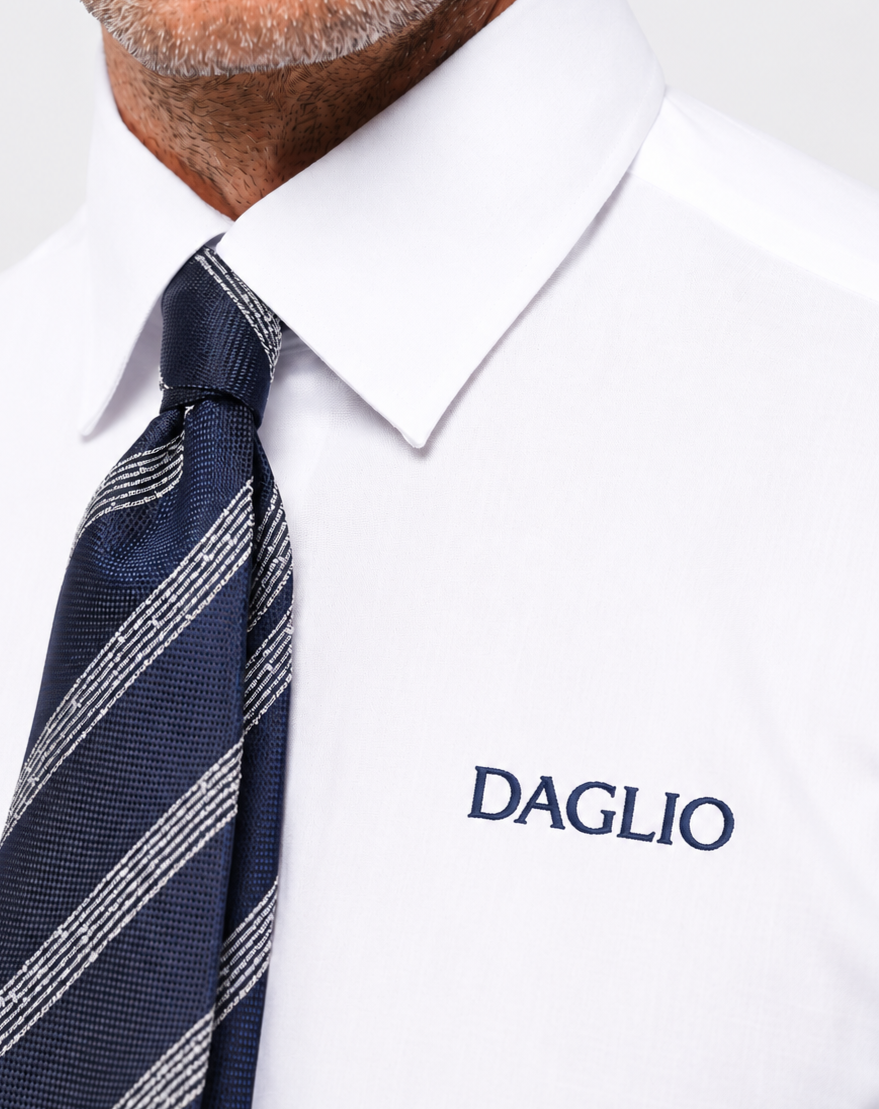
What Is a Custom Corporate Shirt?
A custom corporate shirt is a shirt developed for a company's employees, teams or representatives according to specific functional and branding requirements.
Depending on the project, customization can include:
company logo embroidery,
printed logos or graphics,
corporate colors,
custom fabric,
specific fits,
different collar designs,
custom cuffs,
branded labels,
special buttons,
size ranges,
custom packaging,
and repeat production.
This is different from purchasing a generic blank shirt and adding a logo afterward.
With true custom corporate shirt manufacturing, the shirt itself can be developed around the company.
That difference becomes increasingly important as order quantities, usage frequency and brand expectations increase.
A Corporate Shirt Is Part of Your Company's Visual Identity
Consider where corporate shirts are actually worn.
A hotel receptionist welcomes a guest.
A salesperson meets an important customer.
A car dealership employee presents a vehicle.
A company representative attends an international exhibition.
A retail employee communicates with customers throughout the day.
A restaurant manager moves between guests and staff.
In each situation, the employee is representing the company.
The shirt becomes part of that representation.
Customers may never consciously examine the collar construction, fabric quality or logo positioning. But they see the complete appearance.
A poorly fitting shirt with a weak collar and oversized logo can communicate something very different from a well-proportioned, carefully manufactured corporate shirt.
This is why corporate clothing should not be considered only as a purchasing expense.
It is also a physical expression of the brand.
Promotional Clothing and Corporate Uniforms Have Different Objectives
Promotional clothing often has a relatively simple objective: visibility.
The company wants its name or logo to be seen.
Corporate uniforms have additional responsibilities.
They need to combine:
brand identity + professional appearance + employee comfort + durability + sizing consistency + repeatability.
This changes how the product should be developed.
A shirt worn for a three-day promotional campaign may have different requirements from a shirt worn five days a week by hotel staff.
Likewise, a shirt for an exhibition team may prioritize visual impact and comfort during long event days, while a corporate office shirt may prioritize a refined appearance and easy care.
A specialized corporate shirt manufacturer should therefore ask about the use of the product before recommending the product itself.
Why Start With the Shirt Instead of the Logo?
One of the most common approaches to corporate clothing is:
"We need our logo on 300 shirts."
But from a manufacturing perspective, that is not enough information.
A better starting point is:
Who will wear the shirts, where will they wear them and how frequently will they be used?
Once those questions are answered, the manufacturer can evaluate:
fabric,
fit,
collar,
sleeve length,
cuffs,
color,
sizing,
logo technique,
logo position,
and construction.
Only then can the branding application become part of a coherent product.
A good logo cannot compensate for a poor shirt.
Fabric Selection Should Depend on the Working Environment
The best fabric for a corporate shirt is not necessarily the most expensive fabric.
It is the fabric that works for the intended use.
A corporate shirt manufacturer may need to consider factors such as:
working temperature,
frequency of use,
washing frequency,
breathability,
wrinkle behavior,
durability,
stretch or freedom of movement,
appearance,
seasonality,
and maintenance requirements.
For example, a shirt used by staff working long hours in a warm environment may need different characteristics from a formal shirt worn in an air-conditioned office.
A trade show team walking and standing for ten hours also has different needs from executives wearing shirts mainly during meetings.
This is why fabric selection should come before simply choosing a color from a catalogue.
Corporate Colors Can Go Beyond the Logo
Brand identity does not have to be limited to embroidery.
A corporate shirt can integrate a company's visual identity through the product itself.
Depending on quantities, fabric availability and project requirements, possibilities may include:
custom or carefully selected fabric colors,
contrast details,
buttons,
button thread,
inside collar details,
labels,
trims,
and other subtle design elements.
For larger or recurring projects, custom fabric development may also be considered when commercially and technically appropriate.
The objective does not have to be making the shirt look heavily branded.
Sometimes the strongest corporate identity is subtle.
A carefully selected navy fabric, a specific collar, matching buttons and a small embroidered logo may communicate the brand more effectively than an oversized logo.
Embroidered Company Shirts: Why the Fabric Matters
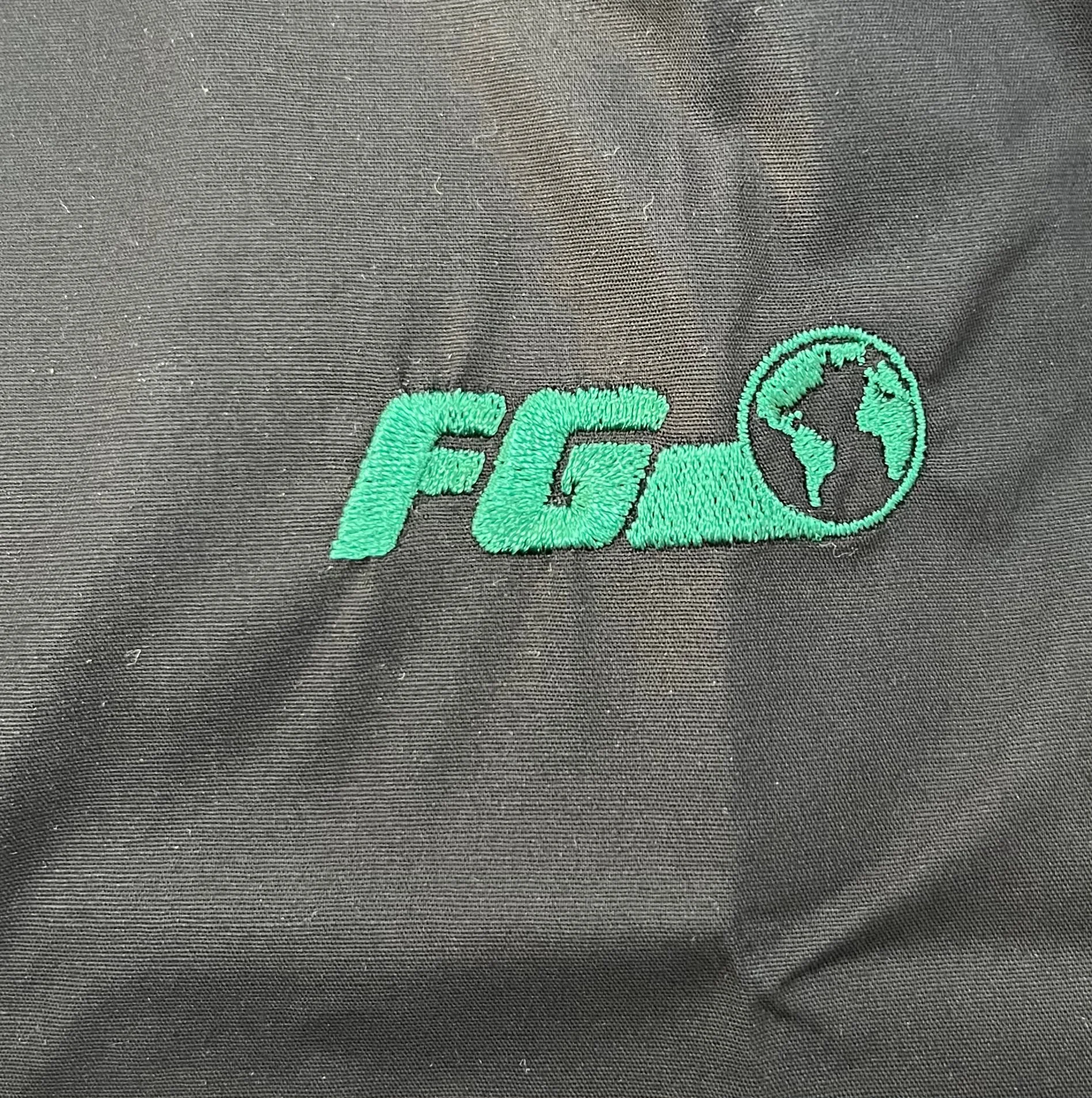
Embroidery is one of the most popular ways to apply a company logo to a shirt.
It can create a durable and professional result, particularly for smaller logos positioned on the chest or other suitable areas.
But embroidery does not exist independently from the shirt.
A dense embroidered logo places thousands of stitches into a relatively small area of fabric.
That means the manufacturer needs to consider the relationship between:
logo size + stitch density + fabric structure + backing/stabilization + positioning.
A dense logo that works well on a heavier fabric may behave differently on a lightweight shirting fabric.
If this relationship is ignored, the area around the embroidery can distort or lose the clean appearance expected from a professional shirt.
This is one reason embroidered corporate shirts benefit from being developed as complete garments rather than treating embroidery as an afterthought.
Is Embroidery Always Better Than Printing?
No.
Embroidery can provide a premium, textured and durable appearance, but not every logo is ideally suited to embroidery.
A company logo may contain:
very fine lettering,
complex gradients,
extremely small details,
large graphic areas,
or other elements that are difficult to reproduce effectively with thread.
In those cases, an appropriate printing technique may provide a better result.
The decision between an embroidered company logo and a printed logo should therefore consider the artwork, shirt fabric, desired appearance, usage and durability requirements.
The question should not be:
"Which technique sounds more premium?"
It should be:
"Which technique produces the best result for this particular shirt and logo?"
Logo Placement Is a Design Decision
The left chest is one of the most common positions for a company logo.
But it is not the only possibility.
Depending on the shirt and corporate identity, branding may be considered on the:
chest,
pocket,
sleeve,
cuff,
collar area,
or another suitable location.
The scale is equally important.
Making a logo larger does not automatically make a corporate shirt look better.
For companies seeking a premium appearance, restrained branding can often be more effective.
The logo should be visible enough to communicate the company identity without destroying the proportions of the shirt.
Fit Matters When 100 Different People Wear the Same Uniform
Producing one shirt that fits one person well is relatively straightforward.
Producing a corporate shirt program for dozens, hundreds or thousands of employees introduces another challenge:
body diversity.
Employees do not have identical proportions.
This is why corporate shirt sizing needs careful planning.
Depending on the workforce and intended appearance, different fits may be considered. A more fitted silhouette can work for some corporate environments, while a Regular Fit or more comfortable construction may be better where movement is important.
The objective should not be to make every employee look identical.
The objective is to create a consistent corporate appearance across different bodies and sizes.
Size Distribution Can Be More Important Than Total Quantity
Suppose a company needs 500 shirts.
From the factory's perspective, "500 shirts" is only the beginning.
How many Small?
How many Medium?
How many Large?
How many XL?
Are extended sizes required?
Are the same quantities needed for different departments?
Will additional stock be required for future employees?
A well-planned size distribution can reduce unused inventory while preventing the company from running out of the sizes it needs most.
For larger corporate programs, historical size data can become valuable when planning repeat orders.
Why Collar Construction Matters in Corporate Shirts
The collar is one of the first parts of a shirt people notice.
It also strongly influences whether a shirt appears formal, casual or contemporary.
A corporate office shirt may require a different collar from a relaxed hospitality shirt.
A trade show shirt worn predominantly with the top button open should be evaluated differently from a formal shirt worn with a tie.
The fabric also affects how the collar behaves.
This means corporate shirt development should consider:
collar shape,
collar height,
interlining,
stiffness,
fabric,
intended styling,
and how employees will actually wear the shirt.
A company uniform should not simply look good when folded in a box.
It needs to look good on the employee.
Cuffs, Buttons and Small Details Influence Corporate Appearance
Corporate customization does not need to stop at the logo.
Small elements can help make a shirt feel intentionally designed for the company.
Depending on the project, this may include:
custom buttons,
button colors,
button thread,
cuff designs,
contrast fabrics,
inside collar details,
or discreet brand colors.
These details can be particularly effective for businesses that want their uniforms to feel distinctive without covering the garment with large logos.
This is one of the advantages of manufacturing the shirt rather than simply decorating a ready-made garment.
Custom Labels Can Make the Shirt Truly Corporate
For more developed corporate programs, the internal branding can also be customized.
Instead of using a generic manufacturer's label, the shirt may carry the company's own:
main label,
size label,
care label,
or other agreed branding.
Custom packaging can also be considered depending on the project.
This turns the garment from a generic shirt carrying an external logo into a product that has been manufactured specifically for the organization.
Trade Show Shirts Require Different Planning
Trade shows and exhibitions are one of the clearest examples of why corporate shirts should be planned carefully.
At an exhibition, employees may spend an entire day:
standing,
walking,
meeting customers,
presenting products,
taking photographs,
and representing the company.
Their shirts need to remain comfortable and presentable throughout the event.
There is also another critical factor:
the exhibition date cannot move because the shirts are late.
For custom trade show shirts and exhibition staff shirts, production planning therefore matters.
Companies should allow enough time for:
design decisions,
fabric selection,
logo preparation,
sampling,
approval,
size confirmation,
production,
quality control,
and delivery.
Ordering custom shirts at the last minute reduces the amount of development and control possible.
Corporate Shirts for Hotels and Hospitality
Hospitality is another sector where shirt requirements can be demanding.
Hotel and restaurant employees may wear their uniforms for long shifts and wash them frequently.
They interact directly with customers, meaning appearance matters throughout the day.
Depending on the role, priorities may include:
comfort,
breathability,
movement,
professional appearance,
washing performance,
easy care,
and durability.
Reception employees may require a different product from restaurant staff or operational teams.
A corporate uniform program can therefore include different shirt specifications while maintaining a consistent brand identity.
Corporate Shirts for Automotive and Retail Teams
Showrooms and retail environments place employees directly in front of customers.
Here, the shirt often needs to communicate professionalism without appearing excessively formal.
Automotive dealerships, premium retail stores, electronics companies and other customer-facing businesses can use custom shirts to create a consistent visual identity across locations.
For companies with multiple branches, repeatability becomes particularly important.
A shirt supplied to a new store six months later should still feel like part of the same corporate uniform system.
Corporate Shirts for Sales Teams
Sales teams frequently represent companies outside their own offices.
Meetings.
Customer visits.
Conferences.
Exhibitions.
Presentations.
A branded shirt can create visual consistency while making the employee immediately identifiable with the company.
But sales employees may also wear the garment for long periods.
This makes fit and comfort just as important as logo visibility.
A shirt that looks professional but becomes uncomfortable after several hours is not a successful corporate product.
Why Repeat Orders Should Be Considered From the Beginning
A common mistake is treating the first corporate uniform order as an isolated purchase.
Companies change.
New employees join.
Existing shirts wear out.
Branches open.
Teams expand.
New exhibitions are scheduled.
If the original shirt was manufactured without considering repeatability, reproducing the same appearance later can become difficult.
A professional corporate shirt program should therefore document relevant product specifications.
Depending on the project, this may include:
fabric,
pattern,
fit,
collar,
cuffs,
buttons,
logo dimensions,
embroidery colors,
logo position,
labels,
and packaging.
The objective is straightforward:
A corporate uniform should remain recognizable even when it is produced again.
Why Ready-Made Blank Shirts Have Limitations
Ready-made shirts can be practical for very small quantities, urgent requirements or basic promotional projects.
But they come with an obvious limitation:
the shirt has already been designed.
The company is choosing from someone else's:
fabric,
fit,
collar,
color,
size range,
buttons,
construction,
and product identity.
The main customization is often the logo.
Manufacturing directly for the company creates a different possibility.
Instead of asking:
"Which existing shirt is closest to what we need?"
the company can ask:
"What shirt should we actually have?"
That is the fundamental difference.
When Does Direct Corporate Shirt Manufacturing Make Sense?
Not every project needs full custom manufacturing.
If a company needs a very small number of shirts immediately for a one-day event, ready-made garments with branding may be the most practical solution.
Custom manufacturing becomes more valuable when the company needs greater control over:
quantities,
quality,
fit,
fabric,
colors,
branding,
size ranges,
repeated use,
or future reorders.
This distinction is important because good manufacturing is not about recommending the most complicated solution.
It is about recommending a solution appropriate to the project.
Corporate Shirts Should Be Designed for Repeated Washing
A corporate shirt does not live in a showroom.
It is worn.
Washed.
Pressed.
Worn again.
This cycle may happen dozens of times.
Therefore, companies evaluating uniform shirts should think beyond the first appearance.
Fabric performance, construction, logo application and care requirements all become important over time.
An impressive sample that performs poorly after repeated use is not a successful corporate uniform.
For everyday staff clothing, lifecycle performance matters more than first-day appearance alone.
The Cheapest Corporate Shirt May Not Have the Lowest Cost
Price matters in every corporate purchasing decision.
Especially when ordering hundreds or thousands of garments.
But purchasing price and actual cost are not always identical.
Imagine Shirt A is cheaper but needs replacement significantly sooner.
Shirt B costs slightly more but remains usable longer.
The relevant calculation is not simply:
price per shirt.
It may be more useful to consider:
cost per wear.
The same applies to poor sizing.
If many employees require exchanges because sizing is inconsistent, there is an operational cost.
If logos deteriorate and shirts need replacement, there is another cost.
If repeat orders cannot match the original uniform, there is a branding cost.
Corporate buyers should therefore evaluate value over the useful life of the garment, not only the initial quotation.
Sampling Reduces Risk Before Corporate Bulk Production
For a significant corporate order, sampling can be one of the most valuable stages.
A physical sample allows the company to evaluate:
fabric,
color,
fit,
collar,
cuffs,
logo size,
logo position,
embroidery quality,
printing,
buttons,
and overall appearance.
This is especially important for logos.
Artwork on a computer screen does not always translate perfectly to fabric.
A logo may appear too large.
Lettering may be too small for embroidery.
A particular thread color may need adjustment.
The fabric may react differently around a dense embroidery area.
Finding these issues before bulk production is much more efficient than discovering them after hundreds of shirts have been completed.
Why Work Directly With a Specialized Shirt Manufacturer?
A promotional clothing supplier can provide valuable services, particularly when a company needs many different promotional products.
But when the primary product is a shirt, working with a specialized shirt manufacturer offers a different type of expertise.
A shirt specialist deals continuously with:
collars,
cuffs,
plackets,
armholes,
fits,
patterns,
interlinings,
shirtings,
buttons,
measurements,
sewing,
pressing,
and shirt-specific quality control.
That knowledge matters when the company wants more than a generic garment with a logo.
It allows the conversation to move from:
"Where should we embroider your logo?"
to:
"What shirt should we manufacture for your employees?"
What Should You Ask a Corporate Shirt Manufacturer?
Before placing an order, corporate buyers can ask questions such as:
What fabrics would you recommend for our working environment?
Can our company logo be embroidered?
Would embroidery or printing work better for our artwork?
Can you produce our corporate color?
Can we customize the collar and cuffs?
Which fits are available?
How should we determine the size distribution?
Can we approve a sample before production?
Can you produce custom labels?
Can the same shirt be reordered later?
How will you maintain consistency between orders?
What lead time should we allow before our trade show or event?
These questions help determine whether a supplier is simply decorating garments or actually capable of developing a corporate shirt program.
Custom Corporate Shirt Manufacturing in Turkey
Turkey has a long textile and apparel manufacturing tradition and is geographically well positioned for companies sourcing from Europe and surrounding markets.
But choosing a corporate shirt manufacturer in Turkey should involve more than geography.
Companies should evaluate:
shirt specialization,
production capability,
fabric knowledge,
customization,
sampling,
quality control,
communication,
flexibility,
and repeat-order capability.
For a corporate uniform, the objective is not simply to find a factory that can sew a shirt.
It is to find a manufacturer capable of translating the company's requirements into a repeatable product.
Mehmet Dağ Shirts: Corporate Shirt Manufacturer in Istanbul
Mehmet Dağ Shirts is a family-owned men's shirt manufacturer based in Istanbul, Turkey, with more than 25 years of industry experience.
Shirts are our specialization.
Alongside private label production for fashion brands, our manufacturing capabilities can support corporate projects for companies requiring shirts for:
employees,
sales teams,
offices,
trade shows and exhibitions,
hotels and hospitality,
retail staff,
automotive teams,
restaurants,
customer-facing teams,
and other corporate applications.
Depending on the project requirements, shirts can be developed with company logo embroidery or printing, different fabrics, corporate colors, custom labels, different fits and other personalized details.
Our objective is not simply to place your logo on a garment.
It is to manufacture the garment that will carry your logo.
From Fabric to Finished Corporate Shirt
Working with a shirt manufacturer also allows more of the product-development process to be considered together.
A corporate shirt project can involve:
Requirement → Fabric → Fit → Collar → Details → Logo → Sample → Approval → Production → Quality Control → Delivery → Repeat Order
Each decision affects the next.
For example, choosing the fabric before evaluating the embroidery may create problems later.
Choosing the logo size before deciding the shirt proportions may create an unbalanced design.
Ordering bulk production without checking the fit can create sizing problems.
A structured process reduces these risks.
Corporate Shirt Manufacturing Is About Standardization
One of the most important differences between a personal shirt and a corporate uniform is scale.
A company does not need one good shirt.
It may need 100, 500, 1,000 or more shirts that collectively create the same visual identity.
This means the manufacturer needs to think about repeatability.
Logo placement should remain consistent.
Colors should remain controlled.
Fits should follow the approved standard.
Collars should have the intended character.
Sizing should be predictable.
Future orders should reproduce the original product as closely as the materials and project conditions allow.
In corporate shirt manufacturing, quality is therefore not simply making an excellent individual shirt.
Quality is reproducing the approved corporate identity across the order.
Final Thoughts: Don't Just Put Your Logo on a Shirt—Build a Shirt Around Your Company
There is nothing wrong with buying ready-made shirts and adding a logo when the project requires a simple, fast promotional solution.
But companies looking for a professional corporate uniform should consider a different approach.
Start with the employee.
Understand where the shirt will be worn.
Choose the appropriate fabric.
Develop the right fit.
Select a collar suitable for the environment.
Plan the size range.
Determine how the company logo should be applied.
Approve the product.
Then manufacture it consistently.
That is the difference between decorating a shirt and manufacturing a corporate shirt.
At Mehmet Dağ Shirts, our more than 25 years of specialization in men's shirts allows us to approach corporate projects from the perspective of a shirt manufacturer.
Whether the requirement is for embroidered company shirts, trade show shirts, sales team uniforms, hotel staff shirts, retail uniforms or everyday corporate clothing, the principle remains the same:
The logo represents your company. The shirt carrying that logo should represent it just as well.
